Limited time: Get $75 off your initial pest control service.

See all offers →

Local pest control · Southwest Florida, FL

Scorpion Control in Sarasota, FL

Scorpions covered under your year-round program, treated at the entry points they use.

  • ★★★★★ 40k+ reviews
  • Applied per label directions
  • Licensed & insured
  • 100% satisfaction, every visit

100% Guaranteed. if they're not dead, we're not done.

$75 off initial

Limited-time offer

Get $75 off your initial service.

Free estimates & quotes

No spam, ever.

Serving Sarasota from our Southwest Florida office

239-686-0689

Scorpion Control built for Sarasota homes

Scorpions covered under your year-round program, treated at the entry points they use.

Direct answer

What's the best scorpion control option in Sarasota?

A customized plan that starts with an inspection of your home and yard, followed by targeted treatment and recurring follow-up. That is what handles Sarasota's scorpion pressure long-term.

Scorpions we treat across our markets in Sarasota

The treatment plan changes depending on the species. Here's what we look for during your inspection.
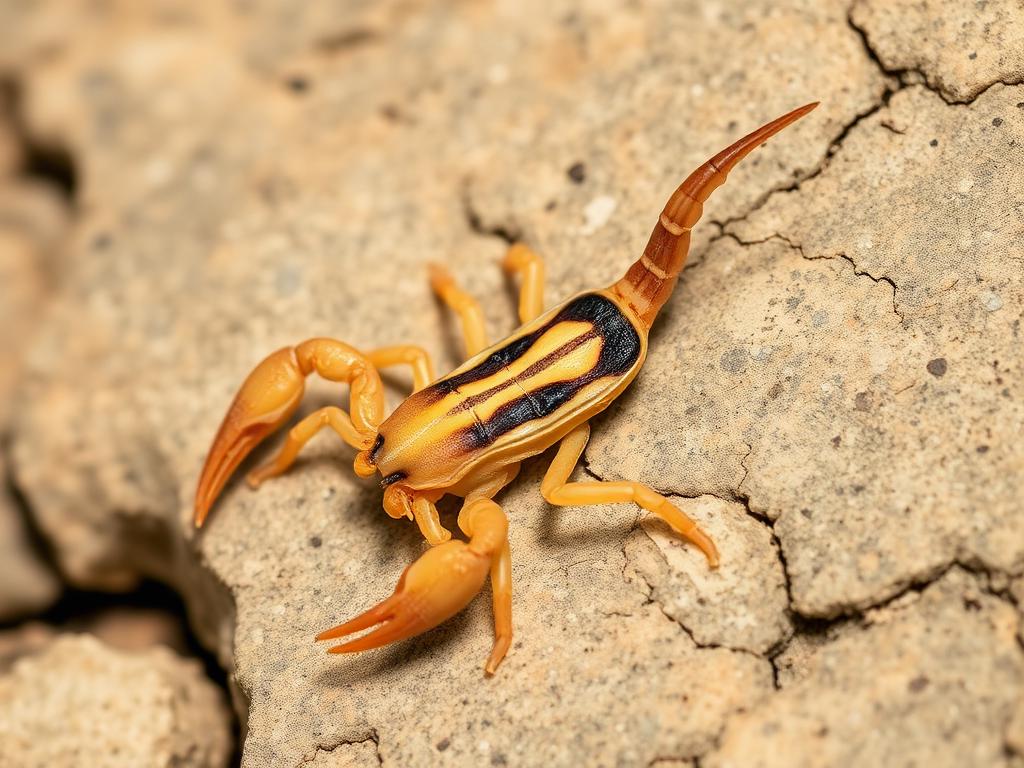
Striped bark scorpion

Centruroides vittatus. Pale tan with two dark stripes down the back, slender pincers and a long thin tail. The most widespread scorpion across Texas and the most common species we treat. Climbs walls and ceilings. Sting feels like a wasp sting; rarely medically serious for healthy adults but painful and reactive in kids and sensitive people.

Florida bark & southern species

Centruroides gracilis (Florida bark), Centruroides hentzi (hentz striped) and Vaejovis carolinianus (southern devil/unstriped). The species most likely to push into homes in Florida and the Carolinas. Smaller and lower-profile than Texas bark scorpions, none medically significant for healthy adults, but still treated with the same UV inspection and harborage program when they push indoors.

How we work in Sarasota

What to expect from your visit

100% Guaranteed
  1. 01

    UV blacklight inspection. Daytime & dusk

    Scorpions glow bright cyan-green under ultraviolet light, which makes them far easier to find. Your technician walks the property at dusk with a UV blacklight (rock landscaping, retaining walls, A/C pads, foundation expansion joints, garage corners, attic access, weep holes and the wood line) and maps where the population is actually living.

  2. 02

    Direct treatment of harborage & entry points

    Scorpions don't groom and they don't ingest baits like roaches do, they have to physically walk across treated surface for a residual to work. We apply a long-residual product into the cracks and crevices where scorpions actually rest by day: weep holes, foundation expansion joints, the slab seam, around plumbing penetrations, the garage door track, attic harborage and the gaps under landscape rock. We also dust wall voids and the attic where indoor activity is documented.

  3. 03

    Knock down the food source

    Scorpions are predators. They followed the crickets, roaches, silverfish, beetles and spiders to your house, and as long as those prey insects are pressed up against the foundation at night, scorpions will follow them in. Our perimeter and exterior light-trap zones get the same treatment so the food source goes down with the predator. Lower the prey, lower the scorpion pressure.

  4. 04

    Recurring service & exclusion follow-up

    Scorpions are long-lived and reproduce in large litters, so a one-time treatment doesn't hold. We come back on a recurring schedule (typically every 30–60 days through the warm months) to refresh the residual on harborage zones, re-inspect with UV, and flag the door sweeps, weep-hole screens, garage thresholds and landscaping changes that keep new scorpions from walking back in.

Between visits

Prevention tips for Sarasota homes.

A few habits between visits keep pressure down.

  • 01

    Point out any scorpion sightings, with where and when, to your technician at each visit.

  • 02

    Replace worn door sweeps and the garage door bottom seal. Bark scorpions slip through credit-card gaps.

  • 03

    Install weep-hole screens on brick and stone-veneer walls.

  • 04

    Pull decorative rock back 12–18 inches from the foundation.

  • 05

    Switch exterior bulbs to yellow LED to cut prey insect traffic at night.

  • 06

    Shake out shoes, towels and laundry left in garages or by the back door.

Other pests we treat in Sarasota

Dealing with more than one pest? Jump straight to the Sarasota treatment page for what you're seeing.
All services in Sarasota

FAQ

Scorpion Control in Sarasota.

Quick answers to what Sarasota homeowners ask us most.

What kinds of scorpions live in our service areas?
Texas carries the heaviest scorpion pressure in our footprint. The striped bark scorpion (Centruroides vittatus) is by far the most common. Pale tan with two dark stripes down the back, found across most of Texas. Florida and South Carolina have lower-volume activity from the Florida bark scorpion (Centruroides gracilis), the hentz striped scorpion (Centruroides hentzi) and the southern devil/unstriped scorpion (Vaejovis carolinianus). None are medically significant for healthy adults but they're still worth treating when populations push into the home. Identification matters. Bark scorpions climb walls and ceilings; the others mostly stay on the ground.
Are scorpion stings dangerous?
For most healthy adults, a striped bark or Florida bark scorpion sting feels like a bee or wasp sting. Sharp local pain, swelling, redness and numbness around the site that resolves in 24–72 hours. Reactions get more serious in young children, elderly adults, anyone allergic and anyone stung multiple times. After any scorpion sting: wash the site, apply a cold compress, take an OTC pain reliever and call Poison Control (1-800-222-1222). Get emergency care for any sting on a child under 6, any allergic reaction, or any unusual symptom.
Why does scorpion control need a UV blacklight?
Scorpions are nearly invisible during the day, wedged into cracks and rock gaps until full dark. Under UV light their exoskeleton glows cyan-green against rock, brick and stucco. We use UV inspection on every scorpion job to find live scorpions, gauge the population, locate harborage and confirm the treatment is working on the next visit.
Why do I keep finding scorpions in the house even after I sprayed?
Three reasons. First, scorpions don't groom themselves much and most over-the-counter sprays lose their residual fast on hot exterior surfaces. By the time a scorpion walks across it a week later the active ingredient is degraded. Second, scorpions live a long time (3–8 years), reproduce slowly with live births of 25–50 scorplings, and ride out a single treatment in deep harborage that store-bought sprays don't reach (weep holes, foundation expansion joints, attic, wall voids, under landscape rock). Third, the food source (crickets, roaches, silverfish, spiders) is still pressed up against the foundation at night and pulling fresh scorpions in. Real scorpion control is a long-residual product applied directly into the harborage, plus prey-insect control and recurring service.
Where are scorpions getting into my house?
Almost always through the same handful of entry points. Worn door sweeps and the gap under the garage door are the most common; bark scorpions can squeeze through a gap as thin as a credit card. Weep holes in brick and stone veneer are next. Others include A/C line set penetrations, plumbing penetrations, dryer vents, attic access through soffit and gable vents, and foundation expansion joints. Bark scorpions climb well, so finding them on ceilings or near attic access is common.
Do scorpions live in groups or are they loners?
Most scorpion species are solitary and even cannibalistic, but the striped bark scorpion is unusual in that it tolerates clustering. It's common to find dozens of bark scorpions sheltering together under a single piece of bark, in a rock pile, in an attic corner or in a wall void during winter and during the heat of summer. Female scorpions also carry their newborn scorplings on their backs for the first 1–2 weeks after birth, so finding a single 'big' scorpion can actually mean 30+ tiny ones nearby. That clustering is what lets a property go from a few sightings to dozens of UV-glow hits in one season if it's not addressed.
Will scorpions go away on their own if I just clean up the yard?
Yard cleanup helps but rarely finishes the job alone. Removing rock piles, woodpiles, dense ground cover and debris against the foundation pulls the harborage out, but the existing population, the prey insects supporting it and the open entry points are still there. Combining yard work with professional treatment, weep-hole screens and door-sweep replacement brings indoor sightings down.
Can my family and pets be home after scorpion treatment?
Yes, once treated areas have fully dried, as directed. Products are EPA-registered and applied according to label directions to harborage zones (cracks, crevices, weep holes, expansion joints, attic and exterior foundation), not across living areas, play surfaces or pet bowls. Tell your technician about any animals kept outdoors so the work can be planned around them.
Do scorpions reproduce inside my house?
They can, and that's the worst-case scenario for an unaddressed home. Striped bark scorpions give birth to 25–50 live scorplings at a time and the female carries them on her back for about a week after birth. If the attic, wall voids or garage are warm, dry and have a stable prey supply (silverfish, crickets, spiders, roaches), a female can establish indoors and produce a new generation each summer. Most homes don't get there because we catch the activity early, but it's exactly why one or two scorpions inside should never be ignored.
What attracts scorpions to a property in the first place?
Three things, in order. First, harborage. Rock landscaping, retaining walls, dry-stack walls, woodpiles, dense ground cover, debris and the dark cracks of brick veneer give them somewhere to hide by day. Second, prey, a property with heavy cricket, roach, silverfish, beetle and spider activity feeds scorpions. Third, water. Dry stretches drive scorpions toward irrigation, A/C condensate, leaking hose bibs and pet water bowls. The houses that get hit hardest tend to back up to greenbelts, undeveloped lots or rock outcrops, have heavy ornamental rock against the foundation, and have unmanaged exterior insect pressure.
How fast does professional scorpion control work?
You'll see UV-glow counts drop noticeably within the first 2–3 weeks of starting service as the existing population walks across treated harborage and entry points. Indoor sightings usually drop sharply by week 4. Because scorpions live for years and migrate in from neighboring properties, the goal of recurring service isn't 'one treatment, never see one again'. It's keeping a fresh residual on the harborage and entry points so any scorpion that pushes in walks across a lethal dose before it reaches your living space. Most homes on a 30–60 day recurring schedule see 90%+ reduction in indoor activity within 60–90 days.
Do you do scorpion control in Florida and South Carolina?
Yes. Texas markets carry the heaviest scorpion pressure. Striped bark scorpions are widespread and warrant a dedicated UV-inspected, harborage-based program. Florida (Florida bark scorpion, hentz striped scorpion) and South Carolina (southern devil scorpion) see lower-volume activity, but when scorpions push into a home we treat them with the same UV inspection, long-residual harborage treatment and recurring service. If you're seeing scorpions anywhere in our footprint, call us.

Southwest Florida office

Get a free quote for year-round pest control in Sarasota.

Free quotes and estimates. Most homes can be quoted over the phone in a few minutes.

100% Guaranteed. if they're not dead, we're not done.

If they're not dead, we're not done.