
Service
Wasp & Hornet Control
Wasp and hornet nests handled as part of your year-round program rather than a call-out.
100% Guaranteed. if they're not dead, we're not done.
Limited-time offer
Get $75 off your initial service.
Free estimates & quotes
No spam, ever.
Nearly 40,000 5-star reviews
100% satisfaction guarantee, if they're not dead, we're not done.
Direct answer
What does wasp and hornet control cover?
The stinging insects we treat across our markets.
Florida, Texas and South Carolina homes deal with the same handful of common stinging insects every spring and summer. They build different nests in different spots, and they need different approaches.
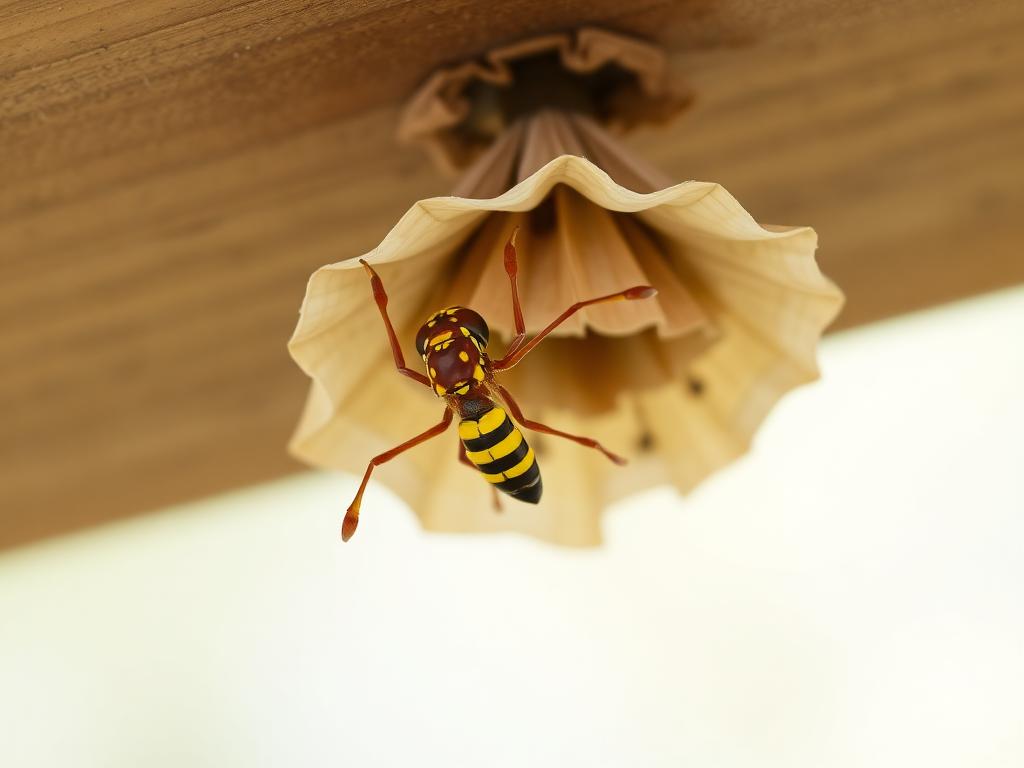
Paper wasps
Polistes species. Slender, long dangling legs, reddish-brown to dark brown with yellow markings. Build the small open umbrella-shaped paper nests you see hanging under eaves, porch ceilings, soffits, shutters, mailboxes, playsets and grill covers. Less aggressive than yellowjackets but will defend the nest if disturbed.
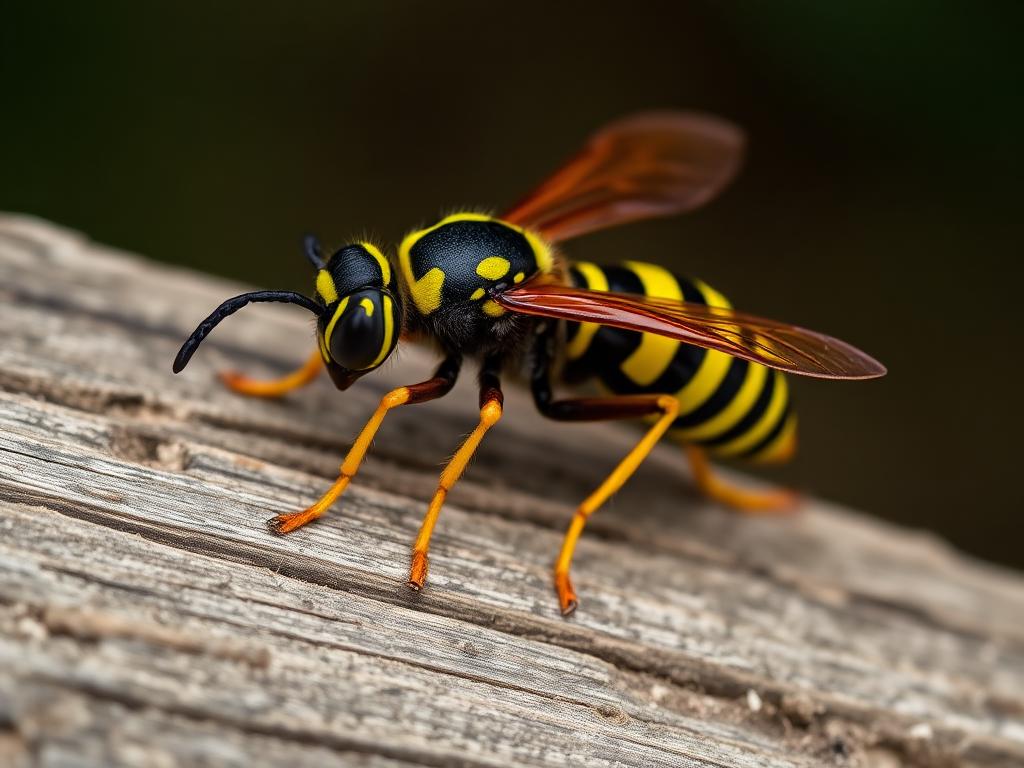
Yellowjackets
Vespula and Dolichovespula species. Short, stocky, bold black-and-yellow striped abdomen. Nest in the ground in old burrows, in wall voids, attic eaves and behind shutters. The most persistent scavenger at picnics, soda cans and trash bins in late summer. Colonies hit several thousand workers by fall. Defend the nest aggressively when disturbed.
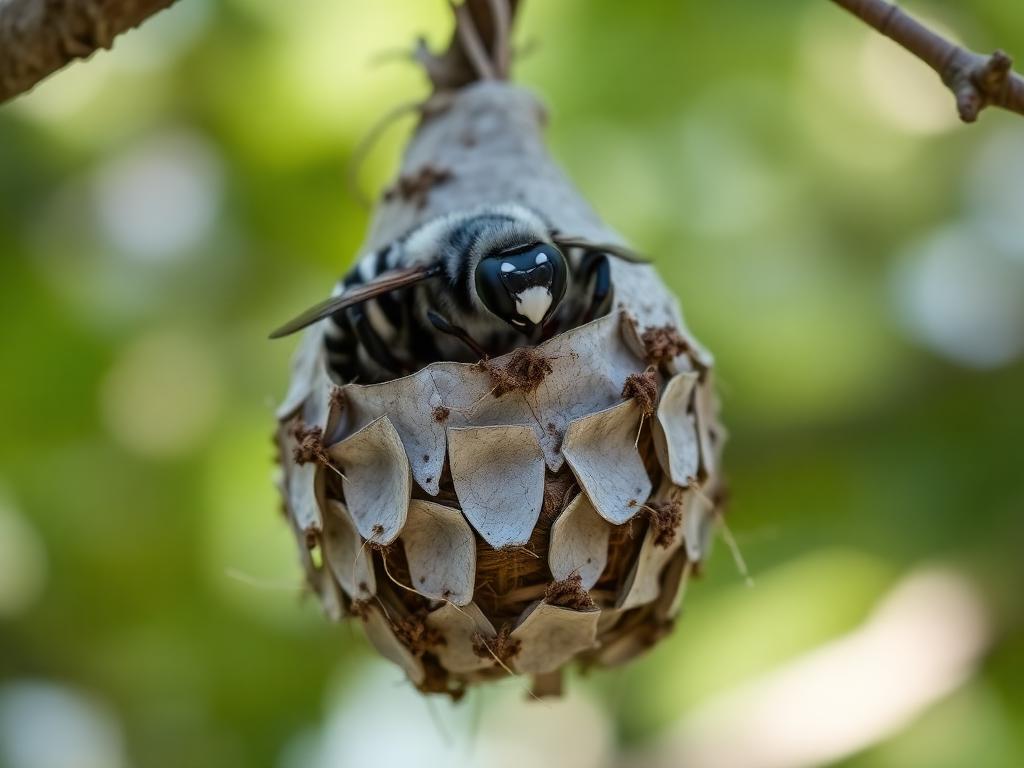
Bald-faced hornets
Dolichovespula maculata. Larger than yellowjackets, glossy black with a white face and white markings on the abdomen. Build the big gray football-shaped paper nests you see hanging from tree branches, eaves, sheds and porch ceilings. Highly defensive of the nest. Will pursue intruders well away from it. Colonies can reach several hundred workers.
European hornet
Vespa crabro. The largest stinging insect most homeowners will see, about an inch long, brown with orange-yellow markings. Nests in hollow trees, wall voids, attics and sheds rather than hanging in the open. Unlike most wasps it is also active at night and is drawn to porch lights. Defends the nest aggressively if disturbed.
Cicada killers show up too. Your technician identifies what's active on your property and treats accordingly.
Specialized treatments
Dealing with one of these specifically?
These get their own dedicated treatment approach, different from our standard wasp & hornet control.
How to know it's a stinging-insect problem
Signs you've got an active nest.
Stinging insects don't hide. These are the signs your technician looks for during a wasp inspection, and the situations that should send you inside and to the phone instead of out for a closer look.
-
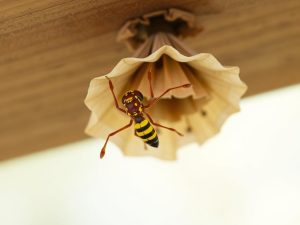
Paper-wasp umbrella under the eave
Small open papery nest, the size of a quarter to a softball, hanging from a single stalk under the eave, porch ceiling, soffit, mailbox or shutter. The exposed comb cells point downward and you can usually see workers tending the brood. Easy to miss until you walk under it.
-
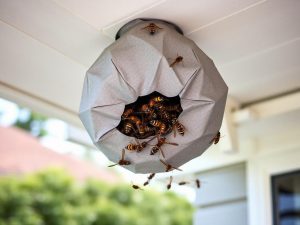
Bald-faced hornet football in a tree or eave
Large gray football- or basketball-shaped paper nest hanging from a tree branch, eave, gable end, shed roof or porch ceiling. Single hole near the bottom with steady traffic in and out. Do not get close. Bald-faced hornets pursue intruders well away from the nest.
-
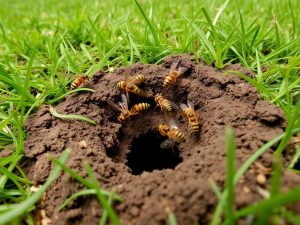
Yellowjackets flying in and out of a hole in the ground
Steady traffic of striped yellowjackets going to and from a small dirt hole in the lawn, at the base of a tree, in a retaining-wall void or under a shed step. Often discovered by a lawnmower, which is exactly when the colony defends violently.
-
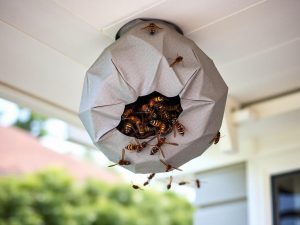
Wasps disappearing into a wall void or soffit
A steady column of wasps or yellowjackets flying to one specific gap in your siding, soffit, gable vent, weep hole or behind a shutter is a wall-void or void-space nest. Do not seal the entry hole. Trapped workers will chew through drywall to find another exit and end up inside your house. Call us first.
-

Mud tubes on stucco, brick or siding
Pencil-width mud tubes stuck to stucco, brick, siding or under the eaves are mud-dauber nests, not paper wasps or hornets. Mud daubers behave differently and are covered on our Mud Dauber Control page.
-
Repeated stings around the yard
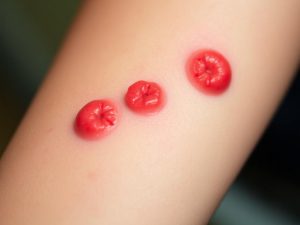
Stings on family members or pets, especially after mowing or yard work, usually mean a hidden ground or wall nest you haven't found yet.
Where stinging insects nest
The same harborage spots. Every spring.
Foundress queens scouting in spring look for the same protected, structure-shaded harborage every year. Treating those spots and removing last year's nest material is what keeps the structure from re-colonizing.
Eaves, soffits & gable ends
The single most common nest spot on residential homes. Protected from rain, warmed by the roof and easy for queens to anchor a paper or hornet nest. We treat these surfaces with a residual that knocks down scouting queens before they can build.
Wall voids, shutters & gable vents
Gaps in siding, behind shutters, around gable vents and weep holes give yellowjackets and paper wasps direct access to wall voids and attic eaves, the most dangerous nest type because you can't see the colony size and trapped workers chew into the home if you seal the entry.
Ground nests in lawn & landscaping
Yellowjackets take over old chipmunk and vole burrows, rotted stump cavities, the void at the base of retaining walls and any small opening in mulch beds. We treat the entry directly at dusk and the nest dies overnight.
Sheds, garages & outbuildings
Undisturbed corners under the rafters of sheds, detached garages, pool houses and storage buildings are textbook paper-wasp and bald-faced hornet harborage. They're protected, warm and rarely walked through by people.
Trees, shrubs & dense landscaping
Bald-faced hornet footballs hang from tree branches and dense shrubs against the house. Paper wasps build inside the foliage of crepe myrtles, magnolias and ornamental shrubs. Surprise discoveries during pruning are how a lot of homeowners get stung.
Playsets, mailboxes, grills & patio furniture
Paper wasps love anything kid-and-pet-traffic-adjacent that's protected from rain, the underside of playset roofs, inside mailboxes, the underside of grill lids that haven't been opened in a while, and inside the cushions of stored patio furniture. These are the first spots to point out to your technician.
Our treatment process
Inspect. Treat. Prevent.
Every job starts with a full inspection so the treatment plan fits your home, not a checklist.
-
01
Inspection. Find every nest before we treat
Stinging insect work is a safety job. Your technician walks the entire exterior. Eaves, soffits, gable vents, porch ceilings, shutters, exterior light fixtures, gas meter housings, mailboxes, playsets, fence posts, the underside of deck rails, and checks the lawn and landscaping for ground-nesting yellowjacket holes. We identify the species before we treat, because paper wasps, yellowjackets and bald-faced hornets all need different approaches.
-
02
Treat the nest directly with proper PPE
Your technician wears full protective gear and treats each active nest at the source, at dusk or early morning when the colony is in the nest and least active. We don't blanket-spray the structure hoping to catch wasps in the air; we treat the nest where the queen and brood live.
-
03
Knock down nests & de-web the exterior
Once the nest is treated and the colony is down, we physically remove accessible paper-wasp umbrellas, mud-dauber tubes and old hornet nests so the structure isn't left advertising harborage to the next queen scouting in spring. We sweep eaves, soffits, porch ceilings and exterior light fixtures as part of every visit.
-
04
Perimeter residual & recurring service
We apply a residual to the eaves, soffits, gable vents and known nest-building zones so foundress queens scouting next spring run into treated surface before they can establish. Recurring exterior service through the warm months keeps the structure from re-colonizing.
Between visits
A few habits that help.
Treatment carries the work. These quick habits keep pressure low between visits.
- Knock down small starter nests in early spring before they grow.
- Seal gaps in siding, gable vents and behind shutters so wasps can't access voids.
- Keep trash cans covered and rinse soda cans before they go in outdoor bins.
- Paint and seal exposed softwood trim, fascia and deck rails.
- Never seal a wall-void nest without treating it first. Trapped workers chew inside.
Service areas
Wasp & Hornet Control by region
 SC
Wasp & Hornet Control in Greater Charleston / Lowcountry
 TX
Wasp & Hornet Control in Greater Houston
 FL
Wasp & Hornet Control in Greater Tampa Bay
 FL
Wasp & Hornet Control in Northeast Florida
 FL
Wasp & Hornet Control in Southwest Florida
 FL
Wasp & Hornet Control in Space Coast
FAQ
Wasp & Hornet Control questions.
What's the difference between a wasp, a hornet and a yellowjacket?
Should I just knock down a wasp or hornet nest myself?
How fast can you get a nest treated?
Can I just spray the nest with hardware-store wasp killer?
Are the wasps in my yard dangerous?
What should I do if I'm stung?
I keep seeing yellowjackets but I can't find a nest. What's going on?
Why are wasps so aggressive in late summer and fall?
What about honey bees and bumble bees?
Will the nest come back next year if I leave it?
Do you treat carpenter bees?
Can my family and pets be home after wasp treatment?
Get wasp & hornet control for your home.
100% Guaranteed. if they're not dead, we're not done.
Ready when you are
Let's protect your home.
Tell us what you've seen and where. We'll get a local technician out to inspect your home and put together a wasp & hornet control plan that fits. Backed by our 100% satisfaction guarantee.
Local office direct lines
- Southwest Florida 239-686-0689
- Greater Tampa Bay 813-473-2954
- Space Coast 321-351-0573
- Northeast Florida 904-712-1989
- Greater Houston 281-845-2775
- Greater Charleston / Lowcountry 843-489-8818